Since 2012Reported results
Kent County Public Schools
Sultana Education Foundation
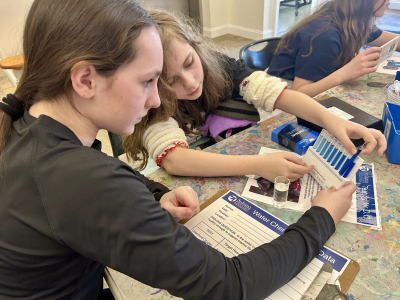
Watershed Watch + Changing Chesapeake
1,625student experiences
75 programs · grades 4 & 7
2025–26 · across multiple learning sessions
A longstanding relationship now supports a sequence of watershed learning across two grade levels—not just a single visit.
How this partnership is growing+
- Longstanding support
VFF’s relationship with Sultana and Kent County began in 2012, laying the groundwork for a growing sequence of watershed learning.
- A wider learning sequence
Fourth-grade Changing Chesapeake sits alongside seventh-grade Watershed Watch, connecting classroom science, field investigation and student action.
- Deeper learning in 2025–26
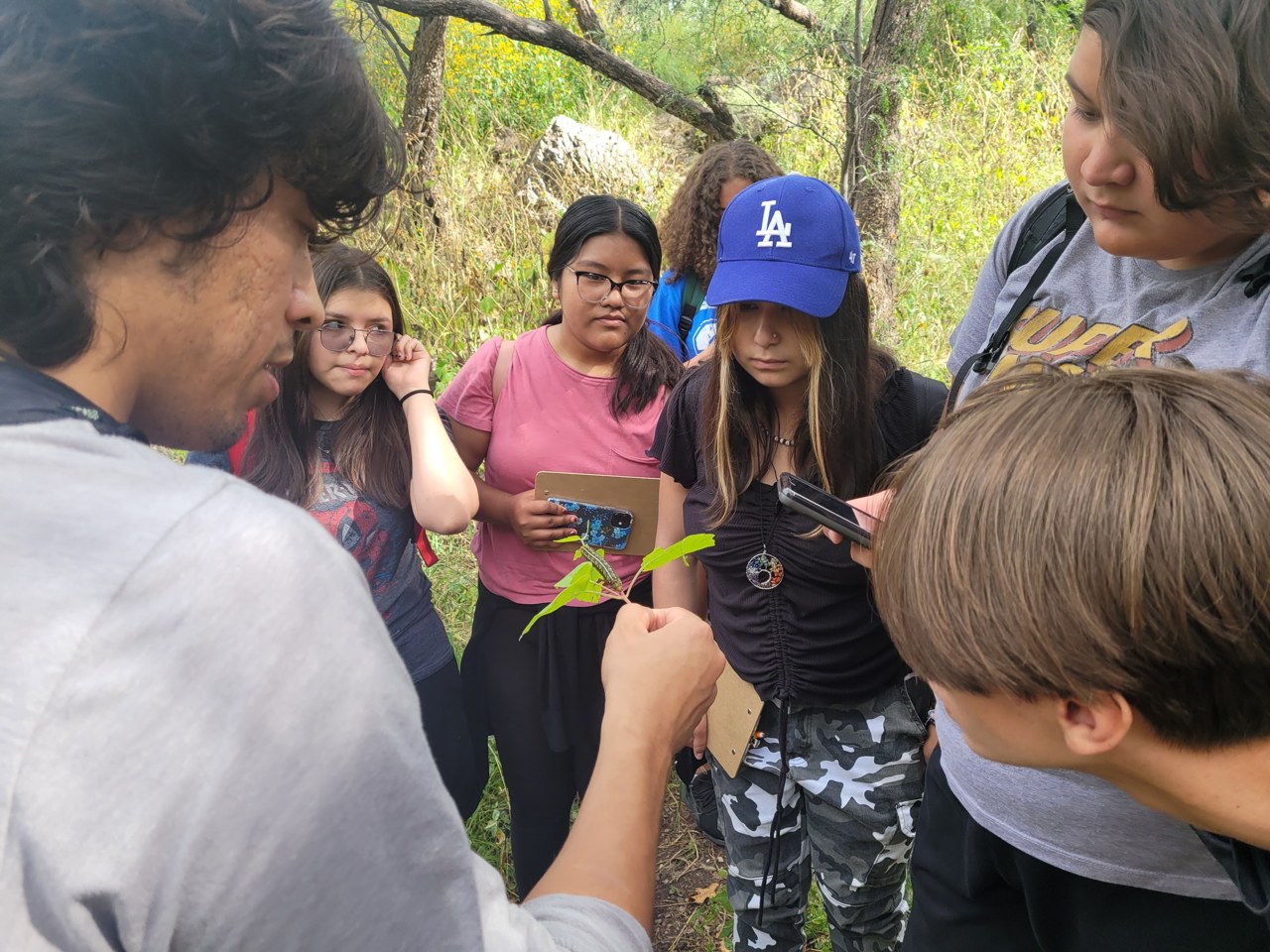
Staff added regular Radcliffe Creek sampling so students could graph change over time, and strengthened preparation for canoe-based water-quality work.
Learning in action
Changing Chesapeake delivered 13 programs and 396 student experiences. Watershed Watch delivered 62 programs and 1,229 student experiences. Together, these 75 programs offered 1,625 opportunities to learn, with students returning for multiple sessions.
What comes next
Continue refining assessment and the links among classroom preparation, field experiences and student-led action.
Since 2017Reported results
Montgomery County Public Schools
Nature Forward
High-school watershed investigation
7,489students represented (estimated)
97 teachers · field experiences at 19 of 25 high schools
2025–26 MCPS high-school MWEE · districtwide estimate
What began in the Rock Creek Community Science 2.0 partnership is reaching more schools through more than one way of learning outdoors.
How this partnership is growing+
- The original partnership
The 2017 Rock Creek model connected school science with a local park and an environmental education partner.
- More schools, season by season
Fall participation grew from 3 schools in 2022–23 to 8 in 2025–26; spring participation grew from 2 to 7. Some schools participate in both seasons.
- More ways to participate
Streamside lessons, classroom-based investigations using collected samples, and a community Salt Watch pilot help teachers work around transport and scheduling barriers.
Learning in action
MCPS’s 2025–26 high-school MWEE implementation table represents an estimated 7,489 students and 97 teachers. Field experiences were reported at 19 of 25 high schools, and 10 schools reported action-project activity. Within this wider district effort, Nature Forward directly led stream studies for 3,451 students from 12 high schools through 116 lessons. The district totals draw on school enrollment, teacher communications and program information and may differ from actual participation or completion counts.
What comes next
Strengthen follow-through on data analysis, synthesis and student action, while continuing to support new teachers and accessible delivery models.
Since 2018Reported results
Prince George’s County Public Schools
Anacostia Watershed Society
Mussel Power
7,000+students engaged
34 schools · 129 teachers receiving professional development
2025–26 · classroom program
A living restoration project has become part of the district’s Biogeochemical Systems course.
How this partnership is growing+
- A pilot with room to grow
The partnership began in 2018, with Mussel Power taking shape through school pilots from 2018 to 2020.
- Embedded in a course
Students care for freshwater mussels, test water quality, measure growth and connect classroom concepts with a local restoration effort.
- A shared scientific practice
Standardized data collection and teacher learning communities support comparisons across classrooms and a common approach to the work.
Learning in action
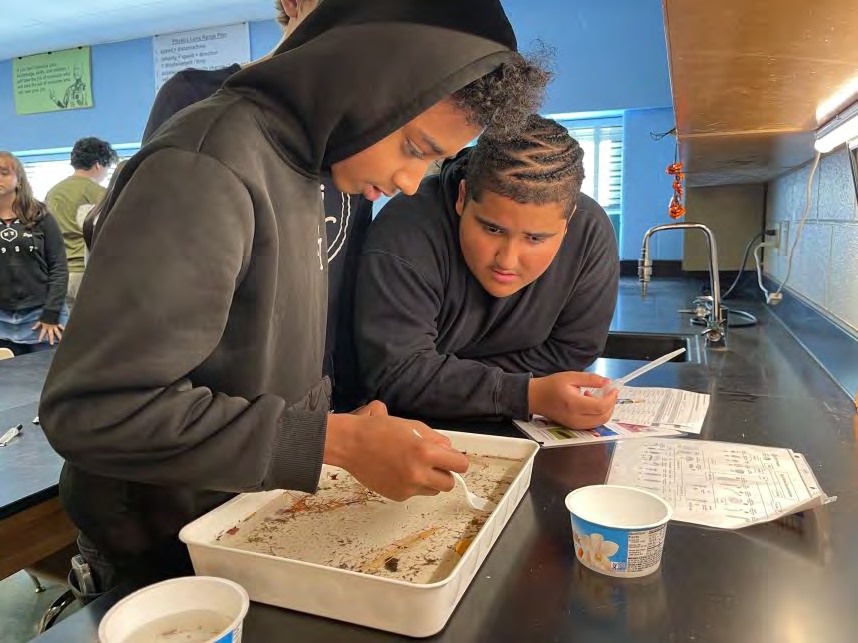
Students raised 1,005 freshwater mussels in 67 classroom tanks across 26 high schools and 8 middle schools. Within this wider program, 610 students took part in mussel-release field trips.
What comes next
Continue improving shared data use and classroom-to-field connections.
Since 2022Reported results
Washington County Public Schools
Fairview Outdoor School · Blue Swallow and local partners
District curriculum, watershed investigations & teacher learning
K–12environmental literacy across the district
Curriculum-connected MWEEs in grades 2, 4, 6, 7, 8 and high-school biology
2025–26 · WCPS district reporting
VFF supports several parts of Washington County Public Schools’ environmental literacy work—from curriculum and field investigations to teacher development and Green Schools activities. The Blue Swallow partnership is one part of this broader district effort.
How this partnership is growing+
- Embed learning across grade levels
Washington County Public Schools integrates MWEEs into its essential curriculum in grades 2, 4, 6, 7, 8 and high-school biology. Fairview Outdoor School supports district teachers and the school-to-field connections.
- Strengthen hands-on investigation
High-school students investigate local waterways through water chemistry, aquatic organisms and fish studies. A seventh-grade teacher team also revised its MWEE to strengthen outdoor investigation, accessibility and hands-on activities.
- Support teachers and student leadership
Blue Swallow Farm Foundation collaborated with WCPS on Watershed Wizards and Watershed Wizards 2 professional development. Other grant-supported activities include high-school river-study logistics and Green Schools student participation and teacher support.
Learning in action
The 2025–26 Watershed Wizards and Watershed Wizards 2 workshops engaged 36 teachers from 22 schools. Alongside this teacher learning, the district reported grade-level MWEE instruction, high-school river investigations and seventh-grade curriculum revisions. Together, these activities reflect WCPS’s broader approach to environmental literacy, teacher development and student action.
What comes next
WCPS plans to strengthen student-learning measures and opportunities for teachers to share field data across schools, while continuing professional development, Green Schools support and high-school river studies.
Since 2022Reported results
Maryland public-school chapters
Howard County Conservancy · Youth Climate Institute
Climate leadership · chapter and regional-hub development
10chapters with VFF-supported educators
Within a national network of 51 chapters
2025–26 · VFF-supported chapters
VFF first helped establish and expand the Youth Climate Institute program. As YCI grew, support shifted toward new school chapters, regional hubs and the educators leading local climate action.
How this partnership is growing+
- Build the program
Early VFF grants supported the development of the Youth Climate Institute model and the systems needed to expand its reach.
- Expand chapters and regional hubs
Later support emphasized opening new school chapters and building regional hubs, including partnerships with Sultana Education Foundation and ShoreRivers on the Eastern Shore.
- Equip teacher leaders and students
In 2025–26, VFF supported educator stipends for ten Maryland chapters. YCI’s full network grew to 51 chapters serving 600 students in ten states.
Learning in action
Across the YCI network in 2025–26, 600 students participated in 51 chapters and completed at least 113 action projects. These are program-wide outcomes; VFF’s more recent support helped educators lead ten Maryland chapters and build infrastructure for new chapters and regional hubs.
What comes next
Continue opening chapters, strengthening regional hubs and supporting teacher leaders and student voice as the program matures.
Since 2024Reported results
Charles County Public Schools
Ferguson Outdoor Learning Center
Environmental literacy in ninth grade
1,252classroom participants
3 high schools · 18 classroom instruction days
2025–26 · classroom learning
Ferguson Outdoor Learning Center, formerly known as the Alice Ferguson Foundation, partners with Charles County Public Schools to connect district science instruction with hands-on watershed learning and field experiences.
How this partnership is growing+
- A district partnership
VFF began supporting the Charles County partnership in 2024.
- Build a classroom foundation
Educators delivered ninth-grade lessons in three high schools, connecting student questions with environmental science and sustainability.
- Strengthen teacher practice
Professional development supported AP Environmental Science and Earth Systems teachers, alongside continued curriculum planning.
Learning in action
Ninth-grade sustainability lessons reached 426 students at Thomas Stone, 429 at St. Charles and 397 at Westlake—1,252 classroom participants in total.
What comes next
Plans for the next school year include reaching more schools and continuing to strengthen the classroom-to-field connection.
Since 2025Reported results
Queen Anne’s County Public Schools
Sultana Education Foundation
Wild Wetlands
1,646student experiences
50 programs · sixth grade
2025–26 · across multiple learning sessions
An experienced nonprofit partner is extending a sustained, curriculum-connected approach into another school district.
How this partnership is growing+
- A new VFF-supported relationship
In 2025, VFF extended its support for Sultana’s watershed learning to Queen Anne’s County.
- Connect different environments
Wetland investigations, classroom learning and paddling experiences help students explore land use, water quality and local habitats.
- Deliver a sequence, not a one-off
Fifty programs connected sixth-grade wetland investigations with classroom learning, paddling and student action.
Learning in action
Wild Wetlands offered 1,646 student experiences in Queen Anne’s County during 2025–26, with students taking part in more than one session. Alongside Kent County’s programs, Sultana delivered 125 programs and 3,271 student experiences across the two districts.
What comes next
Continue strengthening the connections among classroom investigations, wetland experiences and student action.
Since 2025Reported results
Talbot County Public Schools
Phillips Wharf Environmental Center
Oysters, restoration & real-world research
328fourth-grade students
17 classes · 5 elementary schools
2025–26 · all 17 classes completed action projects
Students are moving from learning about oysters to building habitat, testing ideas and taking part in restoration research.
How this partnership is growing+
- Keep the learning going
VFF helped sustain the fourth-grade oyster program and its field experiences, keeping the learning sequence moving.
- Turn learning into action
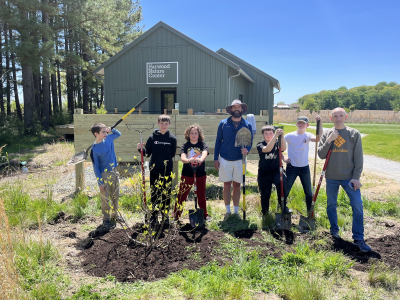
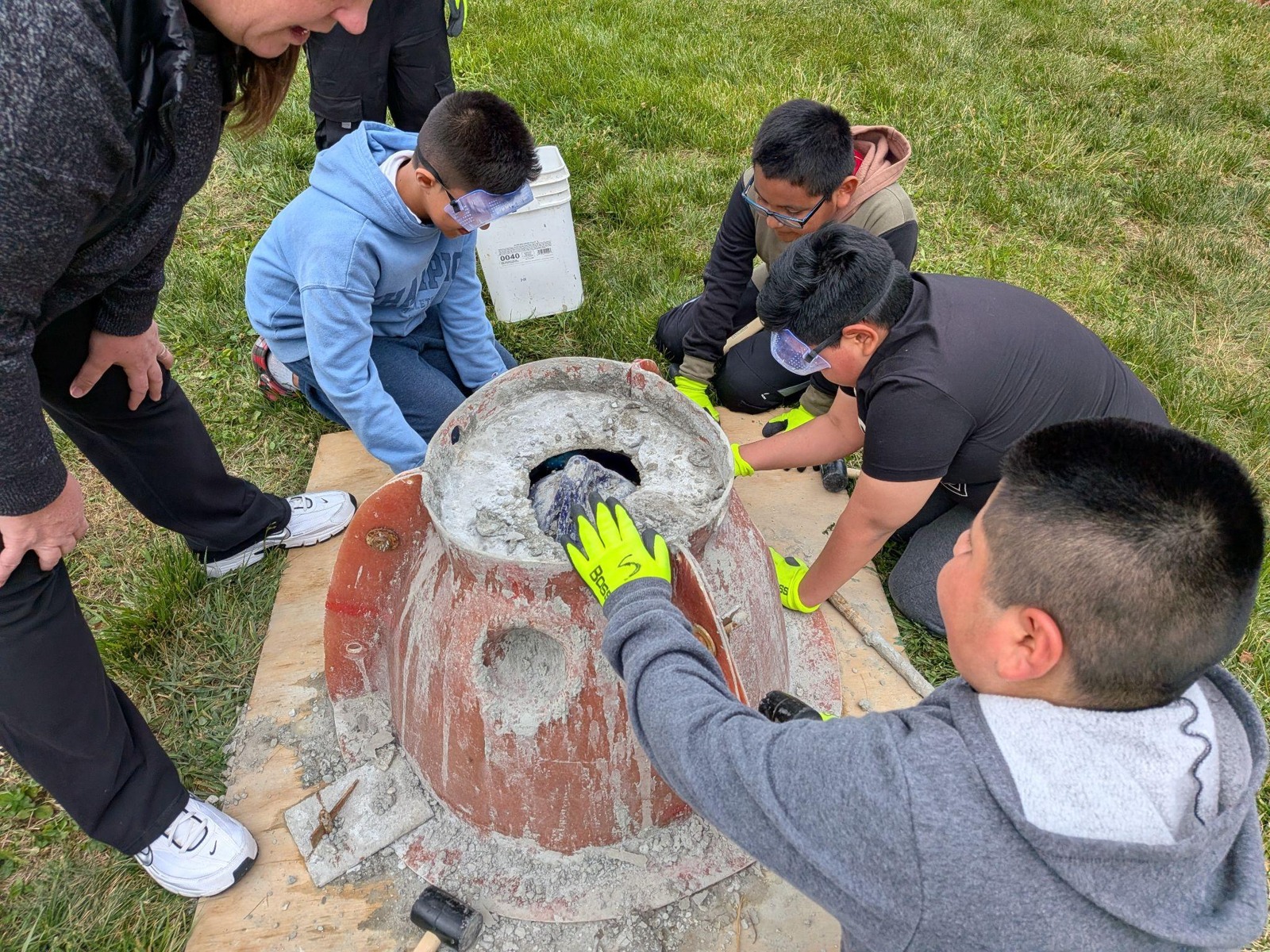
All seventeen classes completed action projects. Students built 34 oyster cages; reef-ball building expanded from two participating classes the previous year to six.
- Connect older students with research
Aquatic Science and AP Environmental Science students at St. Michaels Middle High School investigated alternative oyster substrate through four rounds of data collection and research posters.
Learning in action
The oyster program engaged 328 fourth-graders and eight teachers. Students rated their own oyster knowledge higher after the program: the average rose from 2.26 to 3.39 on a 0–5 scale.
What comes next
Build on the classroom, restoration and secondary-school research connections, while managing group size so hands-on projects remain workable.
Since 2026Program plan
Caroline County Public Schools
Pickering Creek Audubon Center
Chesapeake Habitats: science + community action
400students in the planned program
10 teachers · 2 curriculum supervisors planned
2026–27 · planned participation
Caroline County Public Schools already had a successful link between Environmental Earth Science and American Government. VFF’s 2026 grant supports Pickering Creek in expanding and strengthening that established curriculum integration.
How this partnership is growing+
- Build on a successful district model
Caroline County Public Schools had already developed a strong cross-curricular approach connecting environmental science and American Government. In 2026, VFF began supporting its expansion with Pickering Creek Audubon Center.
- Expand established curriculum integration
The existing Chesapeake Habitats MWEE links Environmental Earth Science and American Government through local habitat investigations, policy analysis and student-designed projects.
- Equip teachers for wider participation
Planned professional development and revised classroom and field lessons will help more teachers deliver this established approach, with additional attention to American Government policy proposals.
Looking ahead to 2026–27
The 2026–27 program is designed to reach 400 students, with professional development planned for ten teachers and two curriculum supervisors. Its approach brings environmental science and civic learning together through local investigation and student action.
What comes next
Broaden access to the already-established science and civics model through teacher development, stronger field connections and student-designed community projects.